


Congratulations to the Graduating Class of 2022!
CSI Singapore would like to extend its heartiest congratulations to the graduates of the PhD Graduate Program in Cancer Biology!
Congratulations to the Graduating Class of 2022! Read More »
CSI Singapore would like to extend its heartiest congratulations to the graduates of the PhD Graduate Program in Cancer Biology!
Congratulations to the Graduating Class of 2022! Read More »

According to GLOBOCAN, gastric cancer (GC) is a significant cause of cancer mortality worldwide, with over 700,000 deaths attributable to it annually. Mesenchymal-subtype gastric cancer (Mes-GC) is a particularly aggressive
The peritoneum is a common site of metastasis in advanced gastric cancer (GC). Diagnostic laparoscopy is now routinely performed as part of disease staging, leading to an earlier diagnosis of synchronous peritoneal metastasis (PM).

Bioorthogonal catalysis (BC) generates chemical reactions not present in normal physiology for the purpose of disease treatment. Because BC catalytically produces the desired therapy only at the site of disease, it holds the promise of site-specific treatment with little or no systemic exposure or side effects.
Transcriptional reactivation of hTERT is the limiting step in tumorigenesis. While mutations in hTERT promoter present in 19% of cancers are recognized as key drivers of hTERT reactivation, mechanisms by which wildtype hTERT (WT-hTERT) promoter is reactivated, in majority of human cancers, remain unknown.
Most mammalian genes generate messenger RNAs (mRNAs) that consist of central protein-coding regions flanked by variable untranslated regions (UTRs). These UTRs, while not directly involved in protein production, nevertheless harbour
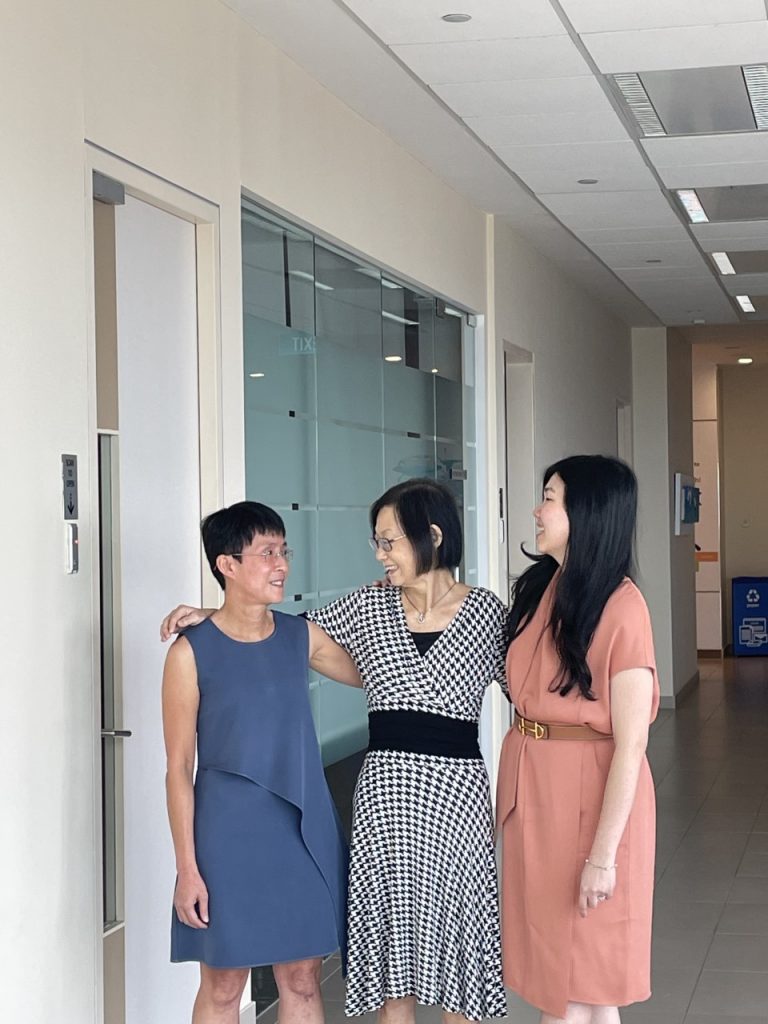
A team of researchers led by Professor Lee Soo Chin, Head and Senior Consultant, Department of Haematology-Oncology, National University Cancer Institute, Singapore (NCIS), and Senior Principal Investigator at Cancer Science
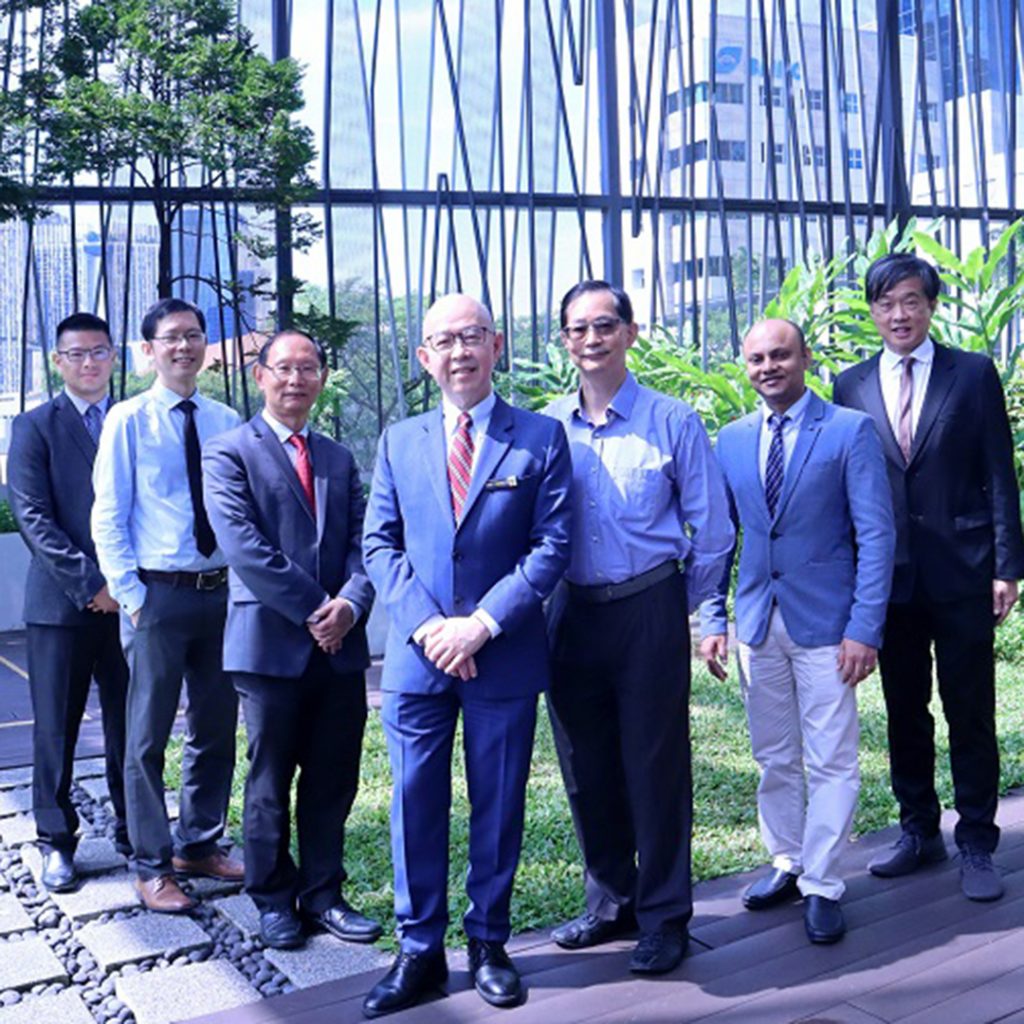
CSI Singapore would like to congratulate its Principal Investigators, namely Prof. Patrick Tan, Assoc. Prof. Edward Chow and Dr. Tam Wai Leong who are involved in a collaborative effort with the National Cancer Centre Singapore (NCCS), the Agency for Science, Technology and Research’s Genome Institute of Singapore (GIS) and Institute of Molecular and Cell Biology (IMCB) and Duke-NUS Medical School.
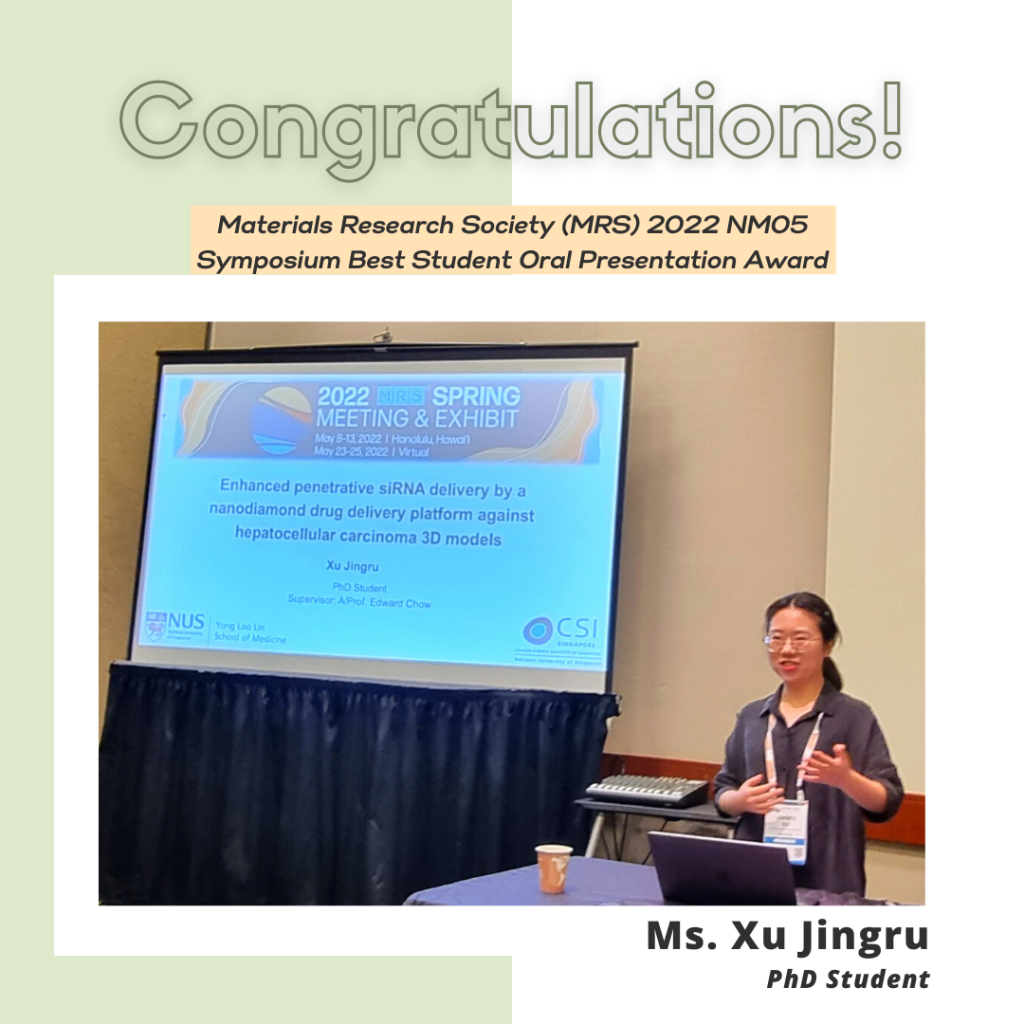
Held in Honolulu, Hawaii between May 8 – 13, Ms. Xu Jingru presented at the NM05 Symposium, which focuses on discussions relating to the recent advances of nanodiamond in quantum sensing, diagnostic, biomedical and other novel applications.

Despite approvals of several therapeutics to treat advanced HCC in the past few years, the impact of anti-angiogenic treatment on HCC patient overall survival remains limited. This suggests there may be alternative, perfusion-independent roles of endothelial cells that support tumor progression.