

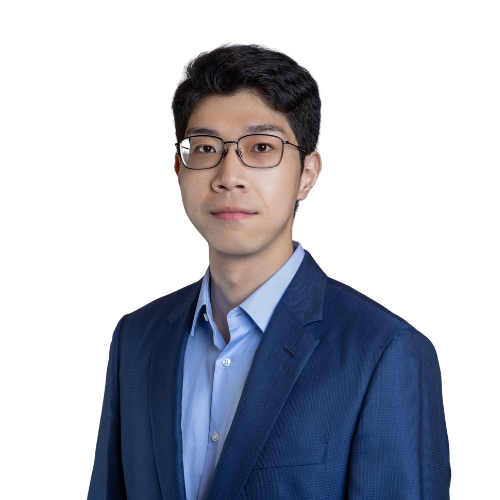
Jiangbo Wei
weijb[at]nus.edu.sg
Principal Investigator, Cancer Science Institute of Singapore
Assistant Professor, Presidential Young Professorship, Department of Chemistry and the Department of Biological Sciences, National University of Singapore
- Presidential Young Professorship, National University of Singapore (2023)
- Josef Fried Chemical Biology Award, The University of Chicago (2021)
- Chinese Government Award for Outstanding Self-Financed Students Abroad (2020)
- Windt Graduate Student Travel Award, The University of Chicago (2019)
- Martha Ann and Joseph A. Chenicek Graduate Research Fellowship, The University of Chicago (2017)
- Excellent Paper Award for Yoke K. Mo Scientific Research Fund, Peking University (2015)
- Academic Innovation Award (only undergraduate awardee in the department), Peking University (2014)
- Award for Academic Excellence, Peking University (2014)
- First Prize in the 9th National Undergraduate Chemistry Laboratory Tournament (2014)
- Yoke K. Mo Scientific Research Fund for Undergraduate Students, Peking University (2013)
- Outstanding Freshman Scholarship, Peking University (2011)
- Member of the Chinese National Training Team for the 43rd International Chemistry Olympiad (2011)
- Gold Medal in the 24th National Chemistry Olympiad Winter Camp (2011)
Gene regulation plays a pivotal role in shaping cellular form and function, where genetic information flows from DNA through RNA to protein as described by the central dogma. At the epicenter of this genetic information flow lies RNA — a molecule that serves as a critical nexus for deciphering both protein-coding sequences and regulatory DNA elements. Notably, the dynamic landscape of RNA is further embellished by chemical modifications, which introduces an additional layer of control to this intricate process. During the past decade, the exploration of gene regulation through RNA modifications has flourished, giving rise to a multidisciplinary field that encompasses Biochemistry and Molecular Biology, Epigenetics, Chemical Biology, and Cell Biology. As we gaze into the future, our laboratory is dedicated to tackling following fundamental question in this burgeoning field:
RNA at the Nexus of Genetic Information Flow:
How do RNA modifications intricately interact with epigenetic mechanisms across diverse biological contexts, particularly in the realms of development, aging, and human diseases? Could the epigenetic effects caused by RNA modifications potentially be inheritable (particularly for repeat RNAs and small RNAs like tRFs)? Furthermore, what novel translational prospects emerge from harnessing this RNA-centric regulatory framework, spanning domains like neuron regeneration, immune response modulation, and both animal and plant developmental processes?
Advancing Precision Medicine through RNA Modifications:
How does the landscape of RNA modifications, along with their associated effectors, respond to intricate cellular signaling pathways such as mTOR, EGFR, and those linked to autophagy? How do external stimuli—ranging from heat shock and UV damage to starvation and stress-induced liquid-liquid phase separation—impact RNA modification profiles? Can we uncover instances of synthetic lethality between specific biological contexts and distinct RNA modifications, thus potentially exploiting them as viable targets for therapeutic intervention? Moreover, what therapeutic implications and synergistic effects arise from co-targeting these pathways alongside RNA modifications, thereby paving the way for precision medicine approaches?
Pioneering Next-Generation RNA Technologies:
Are there methodologies that can be considered as the epitome of profiling RNA attributes, encompassing facets such as modifications, structures, interactions, and more, all while maintaining low input requirements, achieving high-resolution outcomes, and ensuring quantification accuracy? Can we wield the capability (chemical/biophysical tools) to modulate local RNA properties, thereby exerting influence over local transcription (RNA activation/suppression, including chromatin reprogramming) and protein translation, all through precise, site-specific editing of distinct RNA modifications or even certain small RNA itself?
Representative publications
- J. Wei†, X. Yu†, L. Yang†, X. Liu†, B. Gao, B. Huang, X. Dou, J. Liu, Z. Zou, X.-L. Cui, L.-S. Zhang, X. Zhao, Q. Liu, P. C. He, C. Sepich-Poore, N. Zhong, W. Liu, Y. Li, X. Kou, Y. Zhao, Y. Wu, X. Cheng, C. Chen, Y. An, X. Dong, H. Wang, Q. Shu, Z. Hao, T. Duan, Y.-Y. He, X. Li, S. Gao*, Y. Gao*, C. He*, “FTO mediates LINE1 m6A demethylation and chromatin regulation in mESCs and mouse development”, Science 2022, 376, 968-973. [ESI Highly Cited Paper] [Featured by UChicago News] [Highlighted by Nat. Genet., Nat. Chem. Biol., and Sig. Transduct. Target Ther.] [Recommended by Faculty Opinions]
- J. Wei†, F. Liu†, Z. Lu, Q. Fei, Y. Ai, P. Cody. He, H. Shi, X.-L. Cui, R. Su, A. Klungland, G. Jia, J. Chen, C. He*, “Differential m6A, m6Am, and m1A demethylation mediated by FTO in cell nucleus and cytoplasm”, Mol. Cell 2018, 71, 973-985. [ESI Highly Cited Paper]
- P. C. He†, J. Wei†, X. Dou†, B. T. Harada†, Z. Zhang, R. Ge, C. Liu, L.-S. Zhang, X. Yu, S. Wang, R. Lyu, Z. Zou, M. Chen, C. He*, “Exon architecture controls mRNA m6A suppression and gene expression”, Science 2023, 379, 677-682. [ESI Highly Cited Paper] [Featured by EurekAlert!, Phys.org, AZoLifeSciences, Labroots, News AZI, and UChicago News]
- J. Zhang†,*, J. Wei†, R. Sun†, H. Sheng, K. Yin, Y. Pan, R. Jimenez, S. Chen, X.-L. Cui, Z. Zou, Z. Yue, M. J. Emich, J. R. Hawse, L. Wang, H. H. He, S. Xia, B. Han, C. He*, H. Huang*, “A lncRNA from the FTO locus acts as an inhibitor of the m6A writer complex and p53 tumor suppression signaling”, Mol. Cell 2023, 83, 2692-2708.
- Z. Zou†, J. Wei†, Y. Chen†, Y. Kang†, H. Shi, F. Yang, S. Chen, Y. Zhou, C. Sepich-Poore, X. Zhuang, X. Zhou, H. Jiang, Z. Wen, P. Jin*, C. Luo*, C. He*, “FMRP phosphorylation modulates neuronal translation through YTHDF1”, Mol. Cell, 2023, 83, 4304-4317.
Lab Members