
Scientific Advisory Board
The Scientific Advisory Board comprises senior figures linked to global and local networks and, have wide experiences in strategy development and advisory roles through track records in leadership of major programs and/or institutions. They offer advice to the CSI Director on formulating a strategic vision for the CSI in the context of emerging scientific and collaborative opportunities both globally and locally, and in doing so, raise the profile of CSI for new recruitment and new partnerships.
Chairman

Professor Sir Leszek Borysiewicz
Previously Vice-Chancellor, University of Cambridge Chair, Diamond Light SourceProfessor Sir Leszek Borysiewicz was appointed Chair of Diamond Light Source in December 2024. Trained as a clinician and immunologist, Sir Leszek has held numerous prestigious positions, including Vice-Chancellor of the University of Cambridge from 2010 to 2017, Chief Executive Officer of the Medical Research Council from 2007 to 2010, and Deputy Rector of Imperial College London from 2004 to 2007.
He is a trustee of the Wolfson Foundation, Member of the Council of Imperial College London and Chair of the Academic Advisory Committee at Nanyang Technological University. He also serves as a Non-Executive Director of 52 North Healthcare.
He is a Fellow of the Royal Society and a founding Fellow of the Academy of Medical Sciences. In 2001, he was knighted in recognition for his significant contributions to medical research and education. In 2025, he was awarded the Knight Grand Cross of the Order of the British Empire (GBE) for services to cancer research, clinical research, medicine and charities.
Members

Professor Joan Brugge
Co-Director, Ludwig Center at Harvard Louise Foote Pfeiffer Professor of Cell Biology, Harvard Medical SchoolProfessor Brugge is currently co-director of the Ludwig Center at Harvard and Professor of Cell Biology at Harvard Medical School. She received her B.S. degree from Northwestern University, Ph.D. degree from the Baylor College of Medicine, and completed postdoctoral training at the University of Colorado with Dr. Raymond Erikson. Prior to joining Harvard (Professor 1997-present, Department Chair 2004-2014), Prof. Brugge has held a professorship at the State University of New York, Stony Brook (1979- 1988), and was an HHMI Investigator/Professor at the University of Pennsylvania (1989-1992). She was also Scientific Director of the biotechnology company ARIAD (1992-1997). She currently sits on the Scientific Advisory Board of the Allen Institute of Cell Sciences.
Prof. Brugge has received the NIH Merit Award, American Cancer Society Research Professorship, ASCB Senior Career Recognition Award, as well as elected memberships in the American Academy of Arts and Sciences, National Academy of Sciences, and the Institute of Medicine.

Professor Christina Curtis
RZ Cao Professor of Medicine, Genetics and Biomedical Data Science, Stanford University Senior Vice Chair, Department of Medicine, Stanford School of MedicineChristina Curtis, PhD, MSc is the RZ Cao Professor of Medicine, Genetics and Biomedical Data Science at Stanford University where she also serves as Senior Vice Chair of Research in the Department of Medicine and Director of Artificial Intelligence and Cancer Genomics at the Stanford Cancer Institute. Dr. Curtis leads a federally-funded research laboratory focused on AI/ML, computational modeling, high-throughput molecular profiling and experimentation to develop new ways to prevent, diagnose and treat cancer. Her research redefined the molecular map of breast cancer and led to new paradigms in understanding the origins of human cancers, as well as how they evolve and metastasize. Dr. Curtis has been the recipient of numerous awards, including the National Institutes of Health (NIH) Director's Pioneer Award (2018) and the American Association for Cancer Research (AACR) Award for Outstanding Achievement in Basic Science (2022). She received the 2024 AACR-Breast Cancer Research Foundation (BCRF) Award for Outstanding Achievement in Breast Cancer Research and the Susan G. Komen Brinker Award, as well as the 2025 European Society for Molecular Oncology (ESMO) Translational Award and the Paul Marks Prize for Cancer Research. She is a Kavli Fellow of the National Academy of Sciences, a Susan G. Komen Scholar, and a Chan Zuckerberg Biohub Investigator. Dr. Curtis has served as a member of Board of Reviewing Editors at Science, and as a member of the Board of Directors of AACR and Stand Up 2 Cancer (SU2C). She is a scientific advisor to biopharma (Astrazeneca, Genentech, Bristol Myers Squibb, Pfizer), biotech and to VC firms.
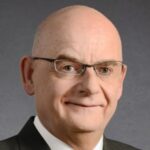
Professor Barry Halliwell
Senior Advisor (Academic Appointments and Research Excellence), Office of the Provost, National University of Singapore (NUS) Chair of the Biomedical Advisory Council, Agency for Science, Technology and Research (A*STAR) Distinguished Professor, Department of Biochemistry, Yong Loo Lin School of Medicine, NUSProfessor Barry Halliwell is Senior Advisor, Academic Appointments and Research Excellence, Office of the Senior Deputy President and Provost. He was a faculty member with the University of London, King’s College from 1974 to 2000 and held a prestigious Lister Institute Research fellowship. From 1995 to 1999, he was a Visiting Research Professor of Internal Medicine and Biochemistry with the University of California Davis, School of Medicine, Divisions of Cardiology and Pulmonary/Critical Care Medicine. Professor Halliwell was a Visiting Professor of Biochemistry to NUS from 1998 to 2000. He was Head of the University’s Department of Biochemistry from 2000 to 2007 and was Deputy Director, Office of Life Sciences from 2001 to 2003. From 2003 to September 2008, he was Executive Director of the NUS Graduate School of Integrative Sciences and Engineering. From Mar 2006 to May 2015, he was the Deputy President (Research and Technology) at NUS. From Jun 2015 to May 2018, he was the Senior Advisor to the President at the National University of Singapore.
An internationally-acclaimed biochemist, Professor Halliwell is known especially for his seminal work on the role of free radicals and antioxidants in biological systems.

Professor Matthew Vander Heiden
Director, Koch Institute for Integrative Cancer Research Professor of Biology, Massachusetts Institute of TechnologyMatthew Vander Heiden is the Director of the Koch Institute at MIT, the Lester Wolfe (1919) Professor of Molecular Biology, and a member of the Broad Institute. He is a practicing oncologist and instructor in medicine at Dana-Farber Cancer Institute/Harvard Medical School. He earned his doctoral and medical degrees from the University of Chicago, where he worked in the laboratory of Craig Thompson. Vander Heiden then completed a residency in internal medicine at Boston’s Brigham & Women’s Hospital and a hematology-oncology fellowship at Dana-Farber Cancer Institute/Massachusetts General Hospital. He was a postdoctoral fellow in the laboratory of Lewis Cantley at Harvard Medical School, where he was supported by a Mel Karmazin Fellowship from the Damon Runyon Cancer Research Foundation. In 2010, Vander Heiden joined the MIT faculty. His work has been recognized by many awards including the Burroughs Wellcome Fund Career Award for Medical Sciences, the AACR Gertrude B. Elion Award, the HHMI Faculty Scholar Award, and an NCI Outstanding Investigator Award. Vander Heiden serves on the scientific advisory board of Yale Cancer Center, Agios Pharmaceuticals, Aeglea Biotherapeutics, iTeos Therapeutics, Evelo Therapeutics, CyteGen, and Auron Therapeutics, of which he is also an academic founder. He is part of the investment advisory board for DROIA Venture Fund.
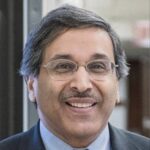
Professor Anil Rustgi
Director, Herbert Irving Comprehensive Cancer Center Associate Dean of Oncology, Chief of Cancer Services, Columbia University, NYProfessor Anil K. Rustgi, MD, is the Interim Executive Vice President and Dean of the Faculties of Health Sciences and Medicine at Columbia University and the Director of the Herbert Irving Comprehensive Cancer Center at New York-Presbyterian Hospital/Columbia University Irving Medical Center. Prof. Rustgi is a world-renowned physician-scientist and leader in the field of gastrointestinal cancers, spanning molecular pathogenesis to preclinical models to clinical studies. He is funded extensively through the NIH and maintains a clinical practice as well. He has been elected to the National Academy of Medicine, is a Fellow of the American Association for the Advancement of Science, and has been designated as American Cancer Society Professor. Prof. Rustgi is a former President of the American Gastroenterology Association (AGA), Editor-in-Chief of Gastroenterology and recipient of the AGA Friedenwald Medal for lifetime achievement. He has been recognized for his teaching and mentorship activities through multiple awards.
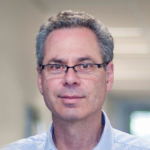
Professor Geoff Lindeman
Division Head, ACRF Cancer Biology and Stem Cells Division and Breast Cancer Laboratory, Walter & Eliza Hall InstituteProfessor Geoff Lindeman, a clinician-scientist, is Joint Head of the ACRF Cancer Biology and Stem Cells Division and Breast Cancer Laboratory and a medical oncologist at the Peter MacCallum Cancer Centre and The Royal Melbourne Hospital. He also holds an honorary appointment as Professorial Fellow in the Department of Medicine, Royal Melbourne Hospital, University of Melbourne.
He completed his medical training at the University of Sydney, followed by Medical Oncology training at Royal Prince Alfred Hospital and Westmead Hospital. He carried out Ph.D. studies at WEHI before pursuing postdoctoral training in the Livingston Laboratory at the Dana-Farber Cancer Institute, Harvard Medical School. In 1998, he was appointed to WEHI, where he and Professor Jane Visvader jointly established a Breast Cancer Laboratory.
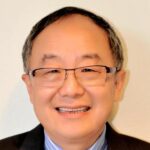
Professor Xiao-Fan Wang
Donald and Elizabeth Cooke Distinguished Professor of Cancer Research, School of Medicine, Pharmacology & Cancer Biology, Basic Science Departments, Duke UniversityProfessor Xiao-Fan Wang is a Chinese-Americans oncologist. He is the Donald and Elizabeth Cooke Professor of Cancer Research at Duke University School of Medicine. The current research in the Wang laboratory mainly focuses on the elucidation of molecular nature and signalling mechanisms associated with the initiation of cellular senescence. In addition, they continue to study changes in tumor microenvironment that promotes tumor progression and metastasis, particularly how tumor cells interact with the immune system. Ultimately, they hope that their studies in these areas will lead to the development of novel therapeutics for the treatment of various types of human cancer.
CSI Corporate Video
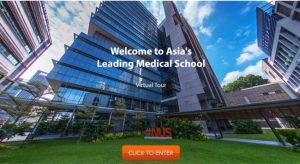
CSI Virtual Tour